I lost my $2m book deal because people mistook my African dialect for AI
His debut novel sparked a ferocious bidding war, then questions over AI brought the deal crashing down. Jerry Falade denies using AI to write the book, and many believe that as a Black Nigerian writer, he was subjected to a level of scrutiny others might not have faced. As he prepares to publish his own account, he tells Alex Hannaford what really happened

It takes months, even years, to write a book. It takes AI-detection software two minutes to ruin your life’s work.” That’s how Jerry Falade begins an essay he’s publishing later this week – an essay, he says, which is one of the hardest he’s ever written.
Falade is the young Nigerian PhD student who last month saw his debut crime novel, Call Me, I’ll Hide the Body, ignite a $2m bidding war – only for it to be withdrawn from submission by his agent after allegations surfaced that he had used AI to write it. Falade denies this and claims racism played a role in the decision to kill his book.
This was all playing out this summer against the backdrop of the Jason Arday case in the UK, the Cambridge academic who was scrutinised by the press over plagiarism allegations before taking his own life. Arday’s case became a flashpoint in discussions about racial double standards in academia, and I was interested that something similar was happening in the US, which I wrote about in The Independent. At the time, Falade didn’t respond to a request for an interview, but after my story was published, he got in touch. He was ready to talk ahead of publishing his version of events online.
In his essay, which The Independent has seen, Falade writes that his first language – Yorùbá – is “a highly lyrical dialect rich in proverbs, aphorisms, metaphors, parallelism” – and “not X, but Y” constructions – many features of which, he notes, are now the hallmarks of AI-generated writing.


Falade explains that he “drew on Yorùbá oral storytelling traditions while writing Call Me, I’ll Hide the Body. As a Yorùbá writer telling a voice-driven thriller, it felt natural that the rhythms, sarcasm, humor, and narrative techniques of my culture would shape the novel’s voice.”
It was a voice that impressed publishers enough that 14 of them entered into an auction in the US alone to bid for the debut novel. In his essay, Falade offers an example of how the Yorùbá dialect works. “Even an insult should display imagination,” he writes. “A blunt ‘You jerk!’ or ‘Go to hell’ would disappoint your Yorùbá ancestors. They might turn in their graves if you wasted an insult by making it ordinary. We say things like: Ẹ rí bí orí ẹ ṣe rí pẹlẹbẹ bí ìdí ìgbákọ (‘See how flat your head is, like the bottom of a food scoop’). But place something along [those] lines … in a manuscript, and an editor trained to fear every unfamiliar metaphor may swear on their life that some hallucinating machine wrote it.”
He went through his manuscript after researching the writing features people associate with AI. “There were 18 ‘not X, but Y’ constructions and 46 em dashes,” he writes. “A career I spent years building was derailed because people unfamiliar with the Yorùbá rhetoric and oral storytelling traditions that shaped my narrative voice concluded, out of sheer cultural ignorance, that a chatbot must have written my work.”
It is ironic then that Falade tells me the reason his manuscript got so much attention was because of its unique voice. “They told me they handle thousands of manuscripts yearly and had not found one that sounded like mine.”
Falade grew up in southwest Nigeria. His parents worked as civil servants, and he says that, in the first few manuscripts he wrote, he would vent his anger at the government, which regularly delayed paying their salaries – a combined income of less than $100 a month. “Sometimes they would owe them [money] for eight months and yet they needed to pay tuition for me and my siblings, buy groceries, pay for house maintenance, all those things,” he says. “So I was always writing angry stuff.”
Falade says the manuscript for Call Me, I’ll Hide the Body, which would ultimately end up at the heart of a huge literary controversy, drew on that childhood, exploring the issues poverty and trauma could cause. “The manuscript showed how these young people are forced to do things they would never do if things were economically okay,” he says. “Like how sometimes poverty can push people into crime.”
Falade studied for a Master’s degree in race, poverty, and gender, in Germany before earning a fellowship to study for his PhD at Southern Methodist University in Dallas, Texas, which he began last year.
His mother died on his birthday a couple of years ago and she is, he tells me, the reason he started his PhD and why he wrote his novel. “I had so many regrets because every child promises their parents so many things. I remember when I was young, she asked, what would you like to become in future? And African parents, they want you to become a doctor or a lawyer. But I told her I wanted to study literature, and so we reached this compromise that I would become an ‘academic doctor’.
“After she passed, I created a checklist of the promises I made to her. One was to get my PhD. And the other was to write a book which I would dedicate to her so her name would be in the hands of so many people out there.”
A career I spent years building was derailed because people unfamiliar with the Yorùbá rhetoric concluded, out of sheer cultural ignorance, that a chatbot must have written my work
When his manuscript was finished, Falade sent a query to a few literary agents. The response, he says, was immediate. He was inundated with requests for the full manuscript. One agent flew to Dallas to meet him and Falade says the pair brainstormed franchise ideas that could spin off from the book’s success.
He eventually signed with New York agent Marc Gerald of Europa Content, but when Gerald was contacted for comment, he told The Independent he was “not interested in weighing in further on the story.”
Then came the meetings with publishers. “Multiple meetings each day,” Falade says. And question after question about the intricacies of his characters’ lives and the novel’s plot. “Someone who doesn’t know what they’ve written about would surely flop at some point,” he says. “Like you can’t put up a facade for that long.”
The $2m figure reported in the press was, Falade says, just for the US rights. The real acquisition figure was much higher and included a UK deal (a six-figure sum), German and Ukrainian rights – all of which had been agreed along with a film option. He won’t name the exact figure, but he admits that the kind of money being offered was incredible.
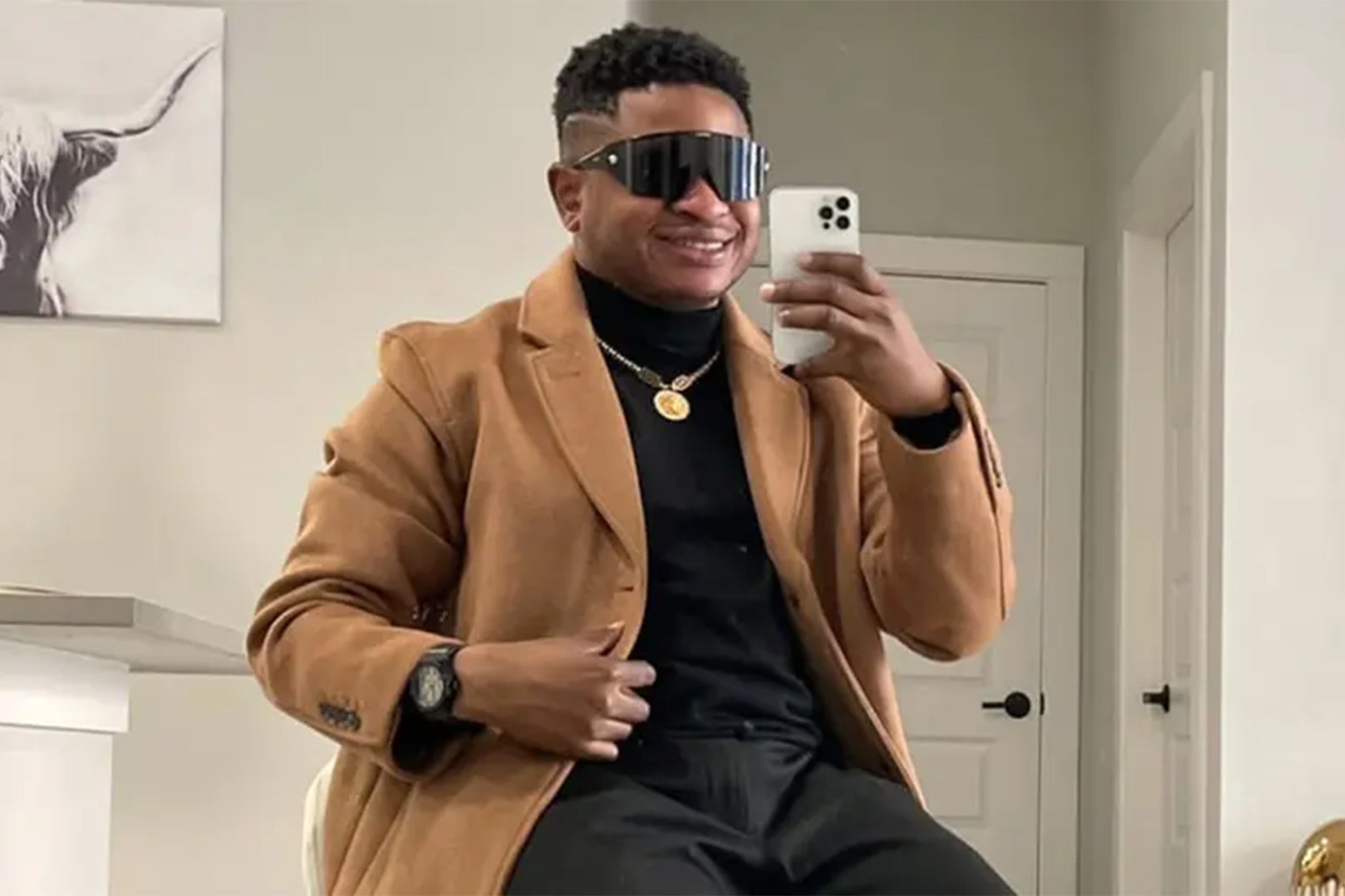
He never imagined how he would spend the advance on himself. The fact that it was happening at all was enough. “Honestly, what went through my head at that moment was that my mum’s name was finally going to be out there. That’s the only reason I wanted to put the book out in the first place – and that I could now take better care of my family”, he says.
Another thing that came to mind was to set up a foundation to give out scholarships to victims of female genital mutilation in Nigeria. “My mum was really interested in that – she even worked with an NGO at some point to help these girls. And I thought it was one of the little ways I could honour her.”
Sometime after submitting his final draft to his agent for distribution to publishing houses, a journalist got hold of it (Falade says he still doesn’t know how) and ran it through an AI detection programme.
I used AI for research because I have studied literature my entire life, and my protagonist is a chemistry student with expertise on different types of acids
Falade says when he heard what was happening he offered to show the journalist his writing process. “They would be able to see what I’ve written, then compare it to the manuscript. They would see that [writing] comes naturally to me. Because if there is anything I’m confident of in this life, it’s my talent.”
Falade explains that the manuscript at that point had not been through any editing process. It was simply the final draft he had submitted to his agent – which had then been sent out to publishers to encourage a bidding war. What usually happens next is that once a deal has been inked, an author will work with their editor at the publishing house to get the manuscript ready to see the light of day. Often this takes months and can include everything from big-picture structural changes down to sentence-level corrections.
Instead, he says, a report was handed to his “creative partners”, accusing him of using AI in the writing process. Subsequently, his agents withdrew the book. “It was my agent who withdrew everything,” he says. “And I had no idea until I saw it in the media. Based on what they communicated to me, they said everyone had dropped me – publishers that had acquired the manuscript, the Hollywood producers interested in me; everyone had dropped me, only to find out in the media it was my agents. So I was surprised.”
He was swiftly dropped his story blew up into a cause celebre literary scandal.
In his essay, Falade writes: “I haven’t seen this kind of investigative zeal directed at white authors accused of using AI: hunting down their unpublished manuscripts, running them through detectors, sending the results to their creative partners, and then proudly announcing it in print. Apparently, that level of scrutiny is reserved for the Black boy from Nigeria.”
In my earlier story on Falade, I noted that a survey of 1,200 authors published by BookBub found 45 per cent were currently using generative AI to assist with their work; that Anthony Horowitz, the bestselling novelist behind Midsomer Murders, has openly admitted using ChatGPT all the time for research. Nobel laureate Olga Tokarczuk sparked controversy after revealing she uses AI to help with character development, although she later clarified it was for research and not for writing.
In an earlier interview with The Wall Street Journal – and in his forthcoming essay – Falade clarifies that he used AI exclusively for research purposes and not to write the book. “I used AI for research because I have studied literature my entire life, and my protagonist is a chemistry student with expertise on different types of acids,” he writes. “I couldn’t invent fallacies which would get called out by critics when the book gets published. So, I used a locally hosted AI (a large language model called dolphin-phi) for questions like: How do you fit a corpse inside a cooler? How to delay a corpse’s decomposition process? Which chemicals can hide blood stains under UV light? This is what I used dolphin-phi for.”
The parallels between Falade's experience and what was also going on in the case of Jason Arday were also striking. In both cases, questions about academic or artistic integrity quickly escalated into public spectacles that many viewed as racially motivated. Both situations highlighted how Black professionals in predominantly white fields can face heightened scrutiny where their legitimacy is more frequently questioned.
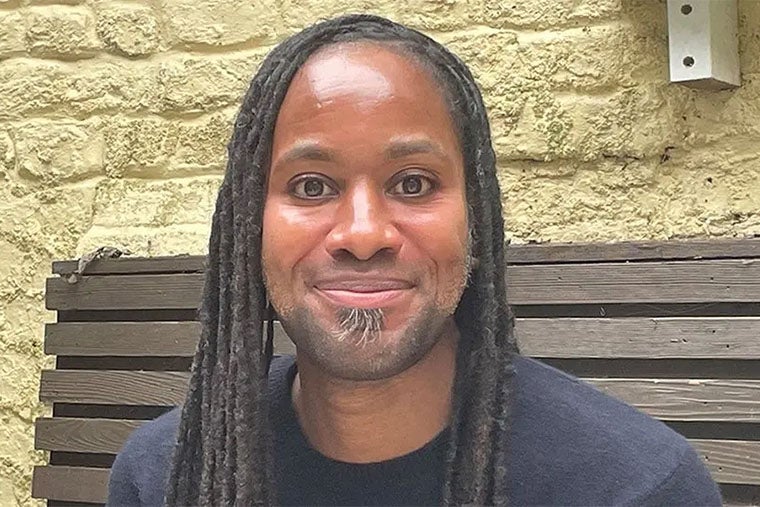
Falade’s mother wasn’t alive to hear about the offers from publishers for Call Me, I’ll Hide the Body. Or the fallout when the manuscript was withdrawn. He says family and friends were shocked at what happened. “The first time my friends even heard about the book deal was when they read about it in the press,” he says.
“I didn’t mention it. They were all sympathetic, trying their best to call me all the time to ensure I didn’t feel alone. My family back in Nigeria were really sad – but more importantly, they cared about my mental health rather than the deal. They knew I’d been dealing with depression. All they cared about was that I was being supported.”
Falade alludes to the “current political climate”, insinuating that international students have come under particular scrutiny from this Trump administration. “I tend to travel a lot,” he says. “Imagine law enforcement finding this stuff on my laptop.”
Falade picks up two exercise books full of his handwriting. “These are just my research notes. My Notes app is full of research. I have multiple drafts [of the manuscript],” he says. “The same people who were quick to throw me under the bus were talking about how much of a genius I was 24 hours earlier. I mean it just seemed crazy,” he says.

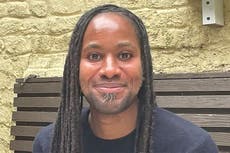

Falade has now signed with a new agent – David Vigliano, whose client roster includes former vice president Mike Pence, Mike Tyson, Justin Timberlake, Prince, and Pope John Paul II. “To fight a dragon, you need a dragon of your own,” Falade tells me. “I'm not allowed to share certain things yet, but eventually everything will come to light.”
Falade won’t discuss how he makes money today while he works on his PhD and waits to see the fate of his novel. “I don’t want to go into detail about my finances,” he says. “Anything I do is under heavy scrutiny.” He also won’t be drawn on how his case has been used to illustrate systemic racism in the publishing industry and double standards. You get the sense that he realises that, in order for Call Me, I'll Hide the Body to finally be published, he would be biting the hand that fed him should he go down that road.
“A famous Yorùbá adage,” he notes in his essay, “says that a ram that steps backwards during a fight is not a coward. It has only stepped back to gather more strength. I have taken that step. Now I’m moving forward to reclaim what is mine.”
Support truly
independent journalism
At The Independent, our mission is to deliver unbiased, fact-based journalism. Journalism that's free from political allegiances and the influences of shareholders and commercial interests.
But we need your help. Your support enables us to uncover crucial stories that would otherwise have gone untold, hold power to account, and amplify voices often unheard.
Whether $5 or $50, every contribution counts. It fuels our reporting, invests in investigations, and maintains our independence.
Support The Independent today and join us in our mission for truth and transparency.
This is not a paywall
Support our trusted, fact-based, free-thinking journalism.
Make a donation today.
It’s a reminder that our trusted, fact-based, free-thinking journalism remains available to everyone thanks to the generosity of our readers. To show your support and help us tell more of the stories that matter, please make a donation today.
Not ready to donate? Choose 'Maybe later' to start reading.


Join our commenting forum
Join thought-provoking conversations, follow other Independent readers and see their replies
5Comments
Bookmark popover
Removed from bookmarks